Let The Soil Breathe.
Farm Every Acre.
Good drainage is not just about getting in the field a few days earlier. It is about healthier soil, more efficient farming, and land that works with the weather instead of against it, for the farm and for the whole community downstream.
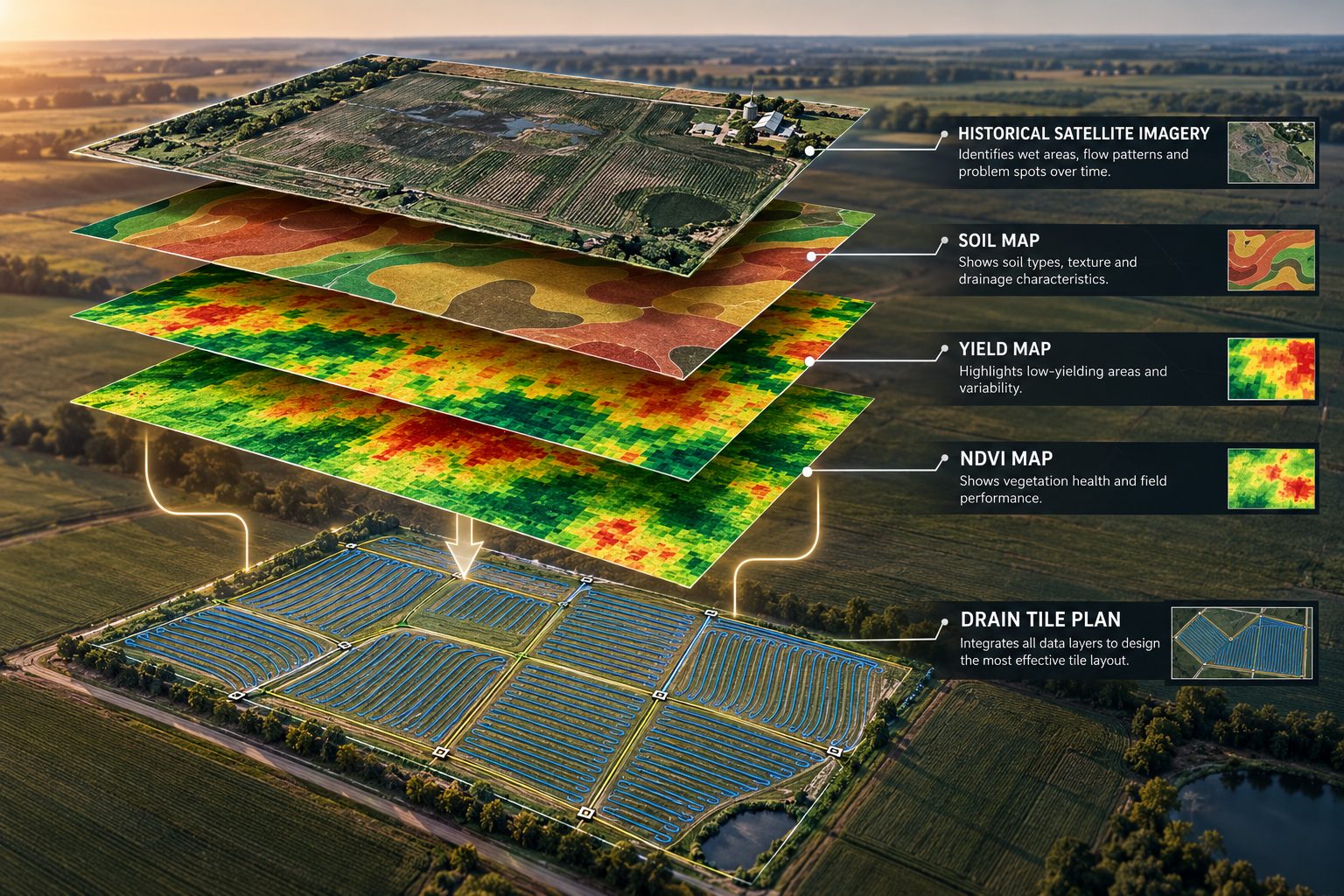
Better For The Ground. Better For The Farm.
Farm Every Acre
No more steering around wet holes and sloughs. Straighter passes, fewer skipped spots, and every acre doing its share.
More Efficient Work
Less time, fuel and wear on equipment working around problem spots, and more consistent crops across the whole field.
Let The Soil Breathe
When excess water drains away, air gets back into the soil. Roots grow deeper and soil life thrives.
Less Tillage Needed
Drier, healthier soil needs fewer passes to work. That protects soil structure and means a smaller carbon footprint.
Healthy Soil Is A Sponge.
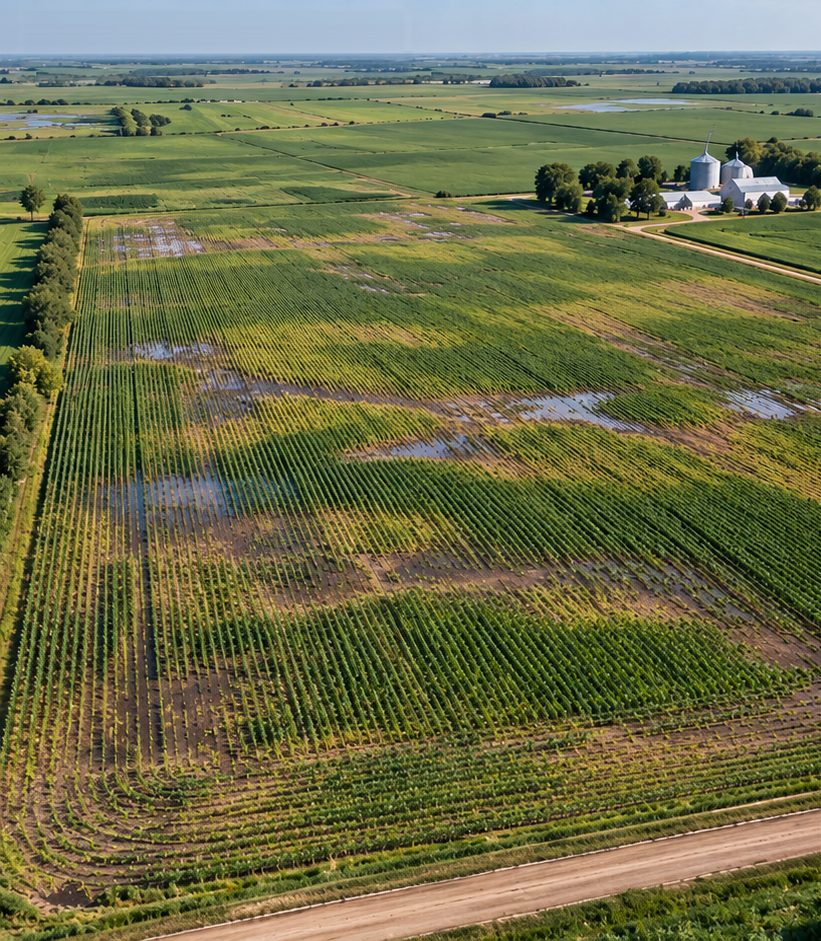
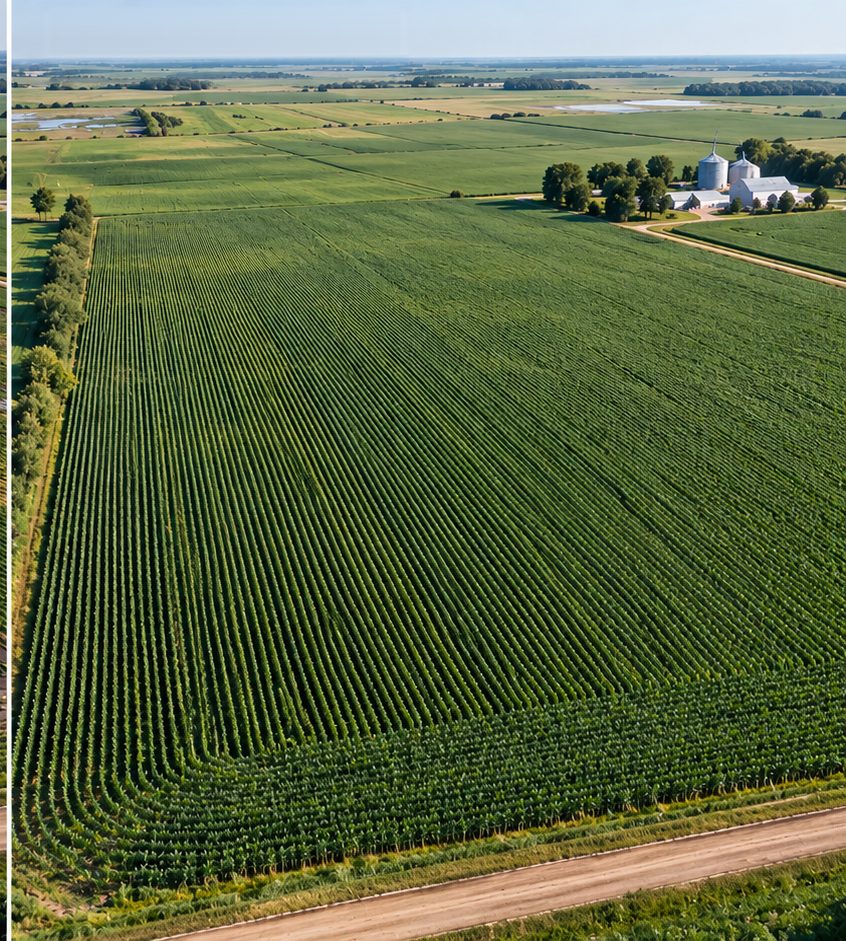
Soil that is already full of water cannot take any more. When the big storm comes, the rain sheets off the surface, carrying topsoil with it and sending a rush of water toward ditches, roads and towns. Tiled soil drains down between storms, so it has room to soak up the next one.
Waterlogged Soil In A Big Rain
Tiled Soil In A Big Rain
Done right, drain tile is good stewardship. It keeps soil in the field, and it keeps the land's water bank at a healthy level so it can take the hit when the big storms come.
Tile Is An Investment In Your Land
Well-drained ground is healthier and more productive, and that shows up in what the land can return. If you own land and have heard mixed things about tile, we are happy to walk you through how we design it and what it does for your soil and your neighbors.
Engineered, Installed And Mapped By Our Team
Walk The Field
We come out, look at the wet spots, the outlet and the lay of the land, and listen to what you are seeing.
Engineer The Plan
Spacing, mains, laterals and outlet designed for your soil and for the neighbors downstream.
Install
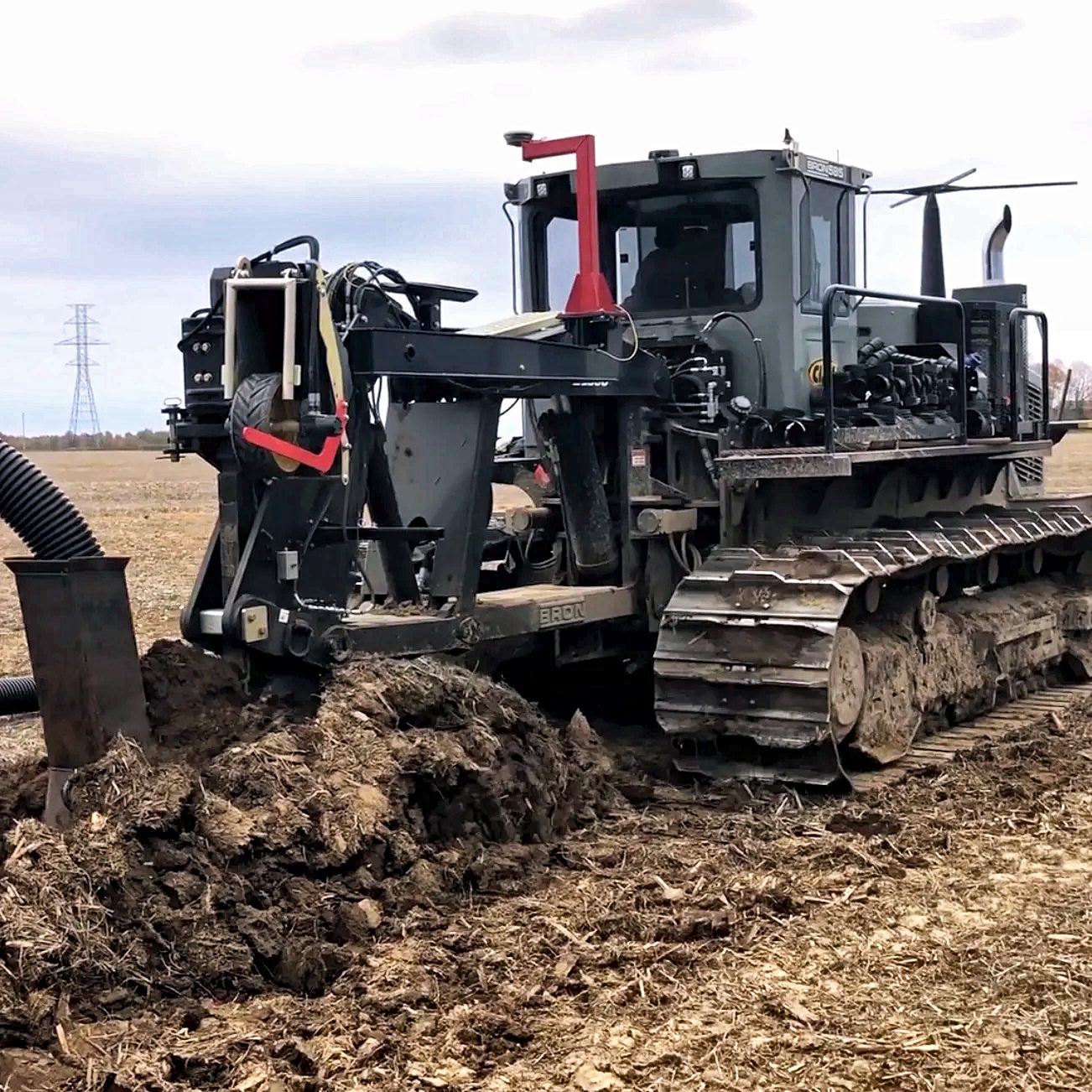
Our own team and equipment do the install, scheduled around your planting and harvest.
Map It
You get a GPS map of every line, so you always know what is in the ground.
Straight Answers About Tile
Doesn’t tile just send water downstream faster?
Tile drains water down through the soil, which is slower and gentler than water sheeting off the surface of a saturated field. Because tiled soil has room to absorb rain, it can help reduce the surface runoff that causes erosion and sudden surges in a big storm.
What about nutrients leaving the field?
We take that seriously. We use our own software to put fertilizer and manure exactly where the crop needs it, and in the right amount, so less is left in the soil to move. [Add any practices you use, such as controlled drainage structures.]
I own land but don’t farm it. Is tile worth it?
Tile is a long-term improvement to the land. Healthier, more productive ground is good for you, for whoever farms it, and for the community around it. We are happy to talk it through.
Request A Tile Plan
Farmer or landowner, tell us a little about the field. We will set up a time to walk it with you.
[Counties or radius you cover from Aberdeen.]